

 Analysis by Gamescozy
I like strategy games that give me a small, clear decision to make and then show me what it changed. Auto Drill: Galaxy builds its appeal around that kind of repeatable progress: I break through a planet in chunks, improve my options, and look for a reason to keep going. The premise is easy to grasp, but the real question is whether the rhythm stays satisfying after the novelty of the first few actions fades.
Starting with the simplest action
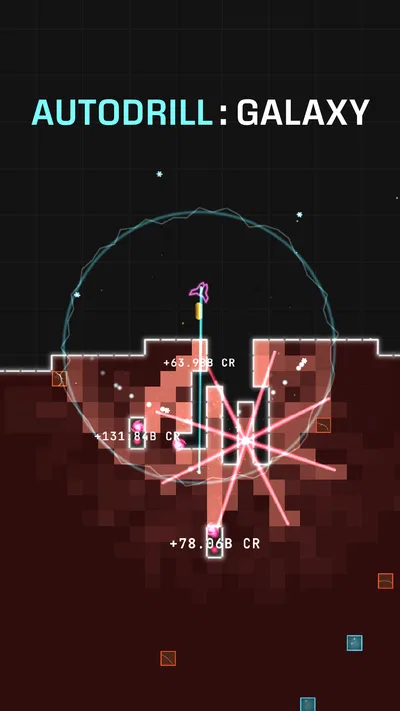
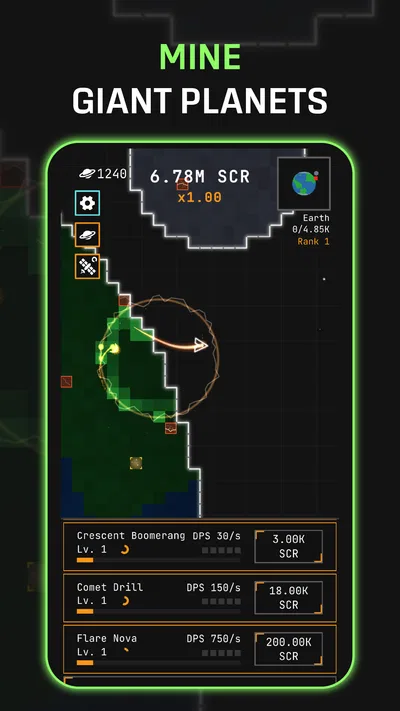
The first thing that stands out is how direct the central task feels. There is no sprawling map or lengthy strategic brief to parse before I can get started. I’m working through a planet block by block, with the drill-and-break idea giving each action an immediate purpose. That makes the game approachable when I have only a short stretch of time and don’t want to relearn a complicated setup.
That simplicity is also a useful filter for deciding whether this is your kind of strategy game. If you enjoy planning routes, managing several resources, or responding to opponents, this is a much narrower experience. Its strategy comes from improving how you progress and making use of weapons and fused skills, rather than from a broad battlefield. I find that distinction important: the game is better approached as a compact progression loop than as a substitute for a deep tactics game.
The title’s emphasis on automation points toward a game where repeated work becomes easier to sustain as you advance. That framing suits the block-by-block premise: the pleasure is not only in taking an action, but in seeing progress build into a longer run. I wouldn’t come to it expecting every moment to demand close attention. It is more appealing if you like a game that can occupy the gaps between other things.
Feedback that keeps the run moving
The core rhythm is easy to explain in practical terms: act on a planet, see the result, use progress to improve your capability, and continue. That short chain gives the game a natural beat. When a session is working for me, I’m not stopping after every small advance to reconsider the whole plan; I’m checking whether the next improvement makes the next stretch feel more rewarding.
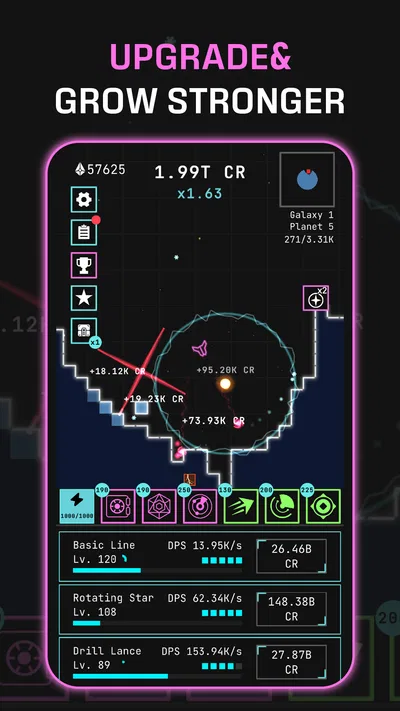
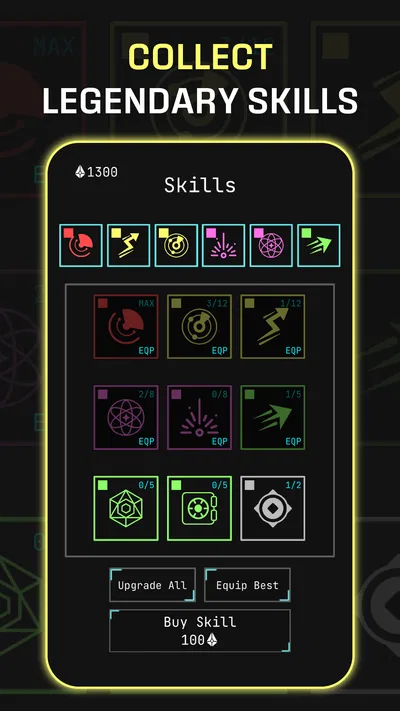
The strongest design idea is the connection between clearing blocks and unlocking weapons or combining skills. Those rewards give progress a purpose beyond simply making a number go up. A new weapon suggests a change in how I approach the next portion, while fused skills imply that choosing what to build toward can matter. The useful habit is to treat upgrades as a decision about the feel of the next stretch, rather than automatically chasing whichever option looks newest.
There is a trade-off, though. A loop built on repeated destruction and improvement can become predictable if the reward arrives too slowly or if each new gain feels much like the last. That is the point at which I’d take a break instead of pushing through out of habit. The game’s simple premise is an advantage for quick access, but it also means the satisfaction depends heavily on whether its progression continues to give each run a noticeable sense of change.
What rewards are really for
Weapons and skill fusion are the most meaningful hooks described by the game’s design, because they suggest two different ways to make progress feel personal. Unlocking a weapon is a clear milestone; combining skills offers a more deliberate reason to think about what I want from a build. For a casual player, the practical approach is to notice which rewards make the next attempt feel different, rather than treating every unlock as equally valuable.
This is where I’d recommend slowing down just enough to make choices intentionally. If a newly available improvement supports the way you already like to play, it may be more satisfying than chasing an option simply because it sounds powerful. Likewise, if a skill combination changes how you think about a run, that is a better sign of meaningful progress than a reward that only postpones the next reset. The game’s loop has room for this kind of small personal preference, even if it isn’t the same as the detailed planning found in heavier strategy titles.
There is also a sensible spending question. The game is free to start, and it offers optional in-app purchases ranging from $1.99 to $99.99 per item. I’d recommend trying the basic loop first and deciding whether the act–upgrade–continue cycle is enjoyable on its own. If you feel tempted to pay because you’re impatient with repetition, that may be a sign the pacing is not working for you rather than a reason to spend more. Players who prefer games with a fixed upfront cost and no purchase prompts may be more comfortable with a paid alternative.
Why a session ends—and why another begins
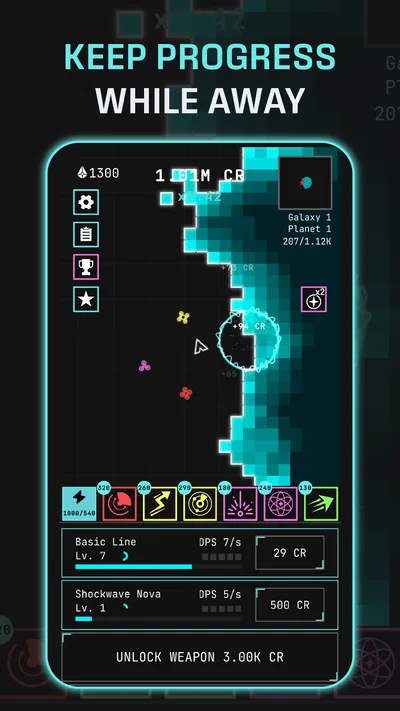
The promise of an infinite run gives the loop a clear forward pull: there is always another stretch to tackle. But an endless structure can blur the point at which a session feels complete. I’d use natural pauses rather than waiting for a perfect stopping point—after a satisfying unlock, after experimenting with a skill combination, or simply when I’ve had enough of repeating the same action. That makes the game easier to enjoy in short visits without turning it into a background obligation.
For example, it fits a commute, a quiet wait, or a brief break when I want something more interactive than scrolling but don’t have the attention for a long strategy match. I can focus on making a little progress, see whether an upgrade changes the next stretch, and stop when I reach a convenient pause. It is less suited to a planned evening of focused play if what I want is a story, varied scenarios, or a sequence of carefully balanced challenges.
The reset is part of the appeal rather than just an interruption: a run can end, progress can be reconsidered, and the next attempt offers another chance to make the loop feel productive. Still, players should be comfortable with repetition. If you need every session to introduce a new setting or a dramatically different objective, block-by-block advancement may start to feel samey. If you enjoy returning to a familiar task with a stronger setup, the restart can feel like an invitation rather than a penalty.
Where it sits among strategy games
Compared with the usual alternatives in strategy, Auto Drill: Galaxy is much more immediate and less demanding of sustained planning. A conventional base-builder asks me to juggle expansion and resources; a tactical game tests decisions against a changing opponent or battlefield. Here, the focus is tighter: break through planets, develop weapons, fuse skills, and extend the run. That makes it easier to pick up than those games, but it also means it cannot offer the same variety of strategic problems.
I’d point a friend toward it if they like incremental progression, enjoy seeing an upgrade alter the pace of a familiar task, and want a game that can be played in small windows. I’d steer them elsewhere if they mainly want competitive play, a rich campaign, or decisions where one mistake can reshape a whole match. This is a preference call, not a flaw: a focused loop is valuable when it matches what you want, and limiting when you expect a wider strategy sandbox.
The game is developed by LAVA LABS OYUN YAZILIM VE PAZARLAMA ANONİM ŞİRKETİ. It has a 4.3 average from around 4.2 thousand ratings, with over 100 thousand installs. Those figures suggest that the compact premise has found an audience, but I’d still use them as context rather than as a guarantee that its repetition will suit you. The version is 25, and the game is rated for Everyone, so its broad accessibility is consistent with a straightforward, non-specialist premise.
A practical fit for your device and routine
Before installing, I’d check that your device runs Android 7.0 or later. That is a concrete requirement worth checking on an older phone or tablet, especially if you plan to use the game as a regular short-break option. The age rating is Everyone, which may make it easier to consider for a broad household audience, though each person’s tolerance for repeated action and optional purchases is still a separate question.
My practical advice is to give the game enough time to show whether its upgrade loop clicks, but not to force a long session just to justify the download. Try a few cycles of breaking blocks, receiving a reward, and seeing how that reward affects the next stretch. If the change makes you curious about what you can unlock or combine next, the loop is doing its job. If you find yourself tapping through without caring what the reward changes, a more varied strategy game will probably hold your attention better.
Auto Drill: Galaxy works best when I treat it as a low-friction progression game, not a deep strategic campaign. Its clearest strength is the tidy chain from action to feedback to improvement, with weapons and fused skills giving the next run a reason to begin. Its limitation is the same focus: repeated block-clearing may not provide enough variety for players who want layered systems or a defined narrative. For a free game that suits short visits and steady upgrades, I think it is worth a try; I’d keep spending optional and let the feel of the loop decide whether I return.